


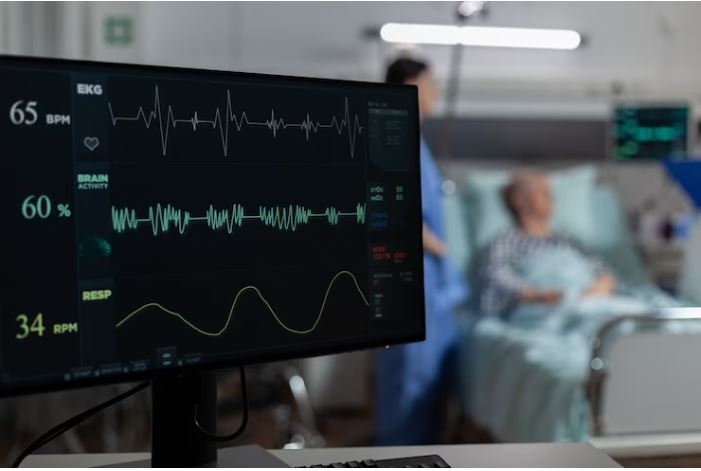
Hospitals and clinics often face the dilemna when purchasing diagnostic and monitoring equipment. For instance, there’s an ongoing debate about using patient monitors versus ECG machines. While both devices handle cardiac data, they serve different clinical purposes. Understanding these differences helps the clinics make smarter decisions.
What is an ECG machine?
An ECG (electrocardiogram) machine is a specially designed diagnostic device that records the heart’s electrical activity over a set period. Electrodes are placed on the skin to record the data. The data is then printed as a digital waveform which shows the heart’s rhythm. ECG machines are used to:
- Diagnose cardiac abnormalities and arrhythmias, which can lead to serious heart attacks
- Used as a one-time or periodic cardiac diagnostic test depending on the patient’s heart history
- Used to understand the rhythm of the heart before cardiac surgeries
You will find clinics and hospitals using ECG machines in outpatient settings and diagnostic labs. However, they are not designed for 24/7 heart monitoring.
What is a patient monitor?
A patient monitor is designed for continuous, real-time tracking of the patient’s heart and body conditions. Along with ECG readings, it tracks other parameters to help assess the patient’s condition. Patient monitors help in tracking:
- Heart rate and rhythm
- Blood pressure levels
- Oxygen saturation levels
- Respiration rates and breathing rhythm
- Body temperature changes
Some advanced models also monitor cardiac output and EtCO2. This equipment is used in ICUs, operating theatres, and emergency rooms to continuously track the patient’s condition. These monitors provide alerts and alarms whenever readings are abnormal. This is an important tool as it gives the doctors the chance to respond immediately.
What are the differences between ECG machines and patient monitors?
Both the equipment serve different purposes. While an ECG machine captures a diagnostic snapshot of the heart’s electrical activity, a patient monitor continuously tracks multiple body parameters and provides real-time observations about the patient’s condition.
ECG machine focuses only on checking heart activity. A patient monitor, on the other hand, checks heart rate, BP levels, oxygen saturation, and respiratory rate. The monitor gives a clear picture of the patient’s body condition.
While ECG tests are used for short-term monitoring, monitors can be used around the clock to track a patient’s condition, improvement, or problems. Thus, the monitor is an essential piece of equipment used for critical patients who need constant supervision.
ECG systems do not have built-in alert mechanisms. Therefore, they are used once on a patient to check heart conditions. Patient monitors have built-in alerts. The alert system makes doctors aware of emergencies and enables rapid intervention.
Which ones does a hospital need?
ECG is generally required in outpatient departments or cardiology clinics for periodic heart assessments. However, the monitor is used in the ICU, NICU, or critical care unit. Therefore, both pieces of equipments are important in every healthcare setting.
KR Lynch & Co is a well-known name in medical devices, surgical and hospital equipment, with more than 100 years of experience in this industry. We supply good-quality patient monitors and ECG machines to different healthcare facilities and clinics.