

Categories
Blog Hospital Furniture

How Predictive Maintenance is Changing Medical Equipment Management


Sensors, data, usage patterns, and service records are utilised for predictive maintenance in medical equipment. This process helps hospitals identify issues before equipment fails. Instead of waiting for devices to break down, regular servicing is a good idea. Predictive maintenance provides a clearer understanding of equipment condition. Based on the data, healthcare facilities can plan maintenance services.

Why Use Predictive Maintenance to Support Healthcare Facilities

Fewer Breakdowns Ensure Safer Patient Care

Whether a ventilator or MRI scanner fails mid-use, your patient can be at risk. Predictive tools provide early warnings so that you can repair the system on time. Proper scanning enables the clinician to trust the report and also the equipment whenever it is needed. It provides peace of mind, which matters.

Lesser Costs and Extended Equipment Life

Emergency repairs cost more money than regular ones. Replacing a tool early costs money. If you catch faults early, you can save money on repair bills. At the same time, you manage to extend your equipment’s life. Here, you can avoid paying for services that are not needed anymore. This frees up budget for other priorities.

Record Keeping and Easier Compliance

Medical equipment must meet strict regulatory and safety standards. The predictive system records every alert and reading. As a result, repairs are never delayed. Even when an auditor asks for the maintenance history, you can provide it immediately. You can generate a complete report in a few clicks. You don’t have to dig through paper files.

Take Measures Before Failure

Reactive maintenance isn’t ideal, as it only happens after your equipment stops working. However, predictive maintenance follows a schedule and helps you understand your tool’s actual condition. Between appointments, repairs happen before a breakdown.

Pay Money for the Service Required Only

If you need to replace equipment early, you lose money. However, a fixed service schedule also means that you are paying for services that are not required anymore. Predictive tools can spot faults early, helping you avoid buying new equipment and the associated costs.

Make Evidence-Backed Decisions

Both habits and guesswork were part of older methods. However, the predictive systems have changed everything. By logging everything, you know exactly when to repair the tools.

Where to Use Predictive Maintenance

You can use predictive maintenance services across different hospital departments. Better value from the system is assured when it is used for critical equipment. If you use these tools frequently, they are more likely to need replacement. In patient care workflows, it can deliver better results.

When using ventilators, infusion systems, patient monitors, and syringe pumps in the critical care unit, you must plan for maintenance service properly. It is also an effective choice for the diagnostic imaging and laboratory departments.

KR Lynch & Co is a reliable medical device service provider. Switching to a predictive maintenance approach helps repair equipment more efficiently. We help keep your medical facility’s workflow seamless. Our professionals understand your requirements and deliver service accordingly. Call or contact us today to learn more.
 

Categories
Blog Hospital Furniture

Patient Monitor vs ECG Machine: What Is the Difference and Which Does Your Hospital Need?

Hospitals and clinics often face the dilemna when purchasing diagnostic and monitoring equipment. For instance, there’s an ongoing debate about using patient monitors versus ECG machines. While both devices handle cardiac data, they serve different clinical purposes. Understanding these differences helps the clinics make smarter decisions.

What is an ECG machine?

An ECG (electrocardiogram) machine is a specially designed diagnostic device that records the heart’s electrical activity over a set period. Electrodes are placed on the skin to record the data. The data is then printed as a digital waveform which shows the heart’s rhythm. ECG machines are used to:

  • Diagnose cardiac abnormalities and arrhythmias, which can lead to serious heart attacks
  • Used as a one-time or periodic cardiac diagnostic test depending on the patient’s heart history
  • Used to understand the rhythm of the heart before cardiac surgeries

You will find clinics and hospitals using ECG machines in outpatient settings and diagnostic labs. However, they are not designed for 24/7 heart monitoring.

What is a patient monitor?

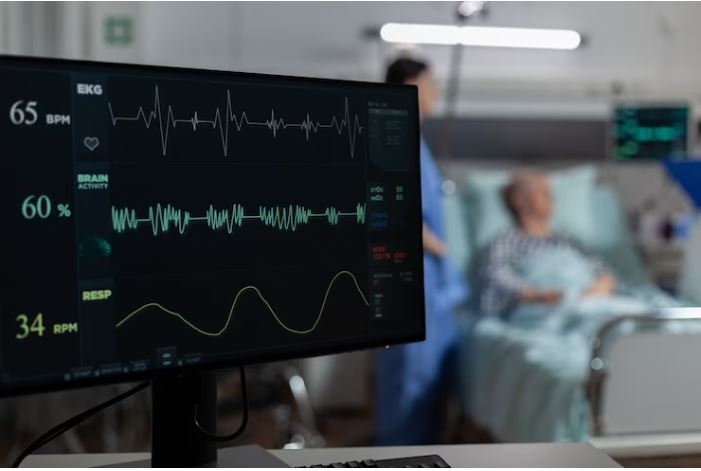
A patient monitor is designed for continuous, real-time tracking of the patient’s heart and body conditions. Along with ECG readings, it tracks other parameters to help assess the patient’s condition. Patient monitors help in tracking:

  • Heart rate and rhythm
  • Blood pressure levels
  • Oxygen saturation levels
  • Respiration rates and breathing rhythm
  • Body temperature changes

Some advanced models also monitor cardiac output and EtCO2. This equipment is used in ICUs, operating theatres, and emergency rooms to continuously track the patient’s condition. These monitors provide alerts and alarms whenever readings are abnormal. This is an important tool as it gives the doctors the chance to respond immediately.

What are the differences between ECG machines and patient monitors?

Both the equipment serve different purposes. While an ECG machine captures a diagnostic snapshot of the heart’s electrical activity, a patient monitor continuously tracks multiple body parameters and provides real-time observations about the patient’s condition.

ECG machine focuses only on checking heart activity. A patient monitor, on the other hand, checks heart rate, BP levels, oxygen saturation, and respiratory rate. The monitor gives a clear picture of the patient’s body condition.

While ECG tests are used for short-term monitoring, monitors can be used around the clock to track a patient’s condition, improvement, or problems. Thus, the monitor is an essential piece of equipment used for critical patients who need constant supervision.

ECG systems do not have built-in alert mechanisms. Therefore, they are used once on a patient to check heart conditions. Patient monitors have built-in alerts. The alert system makes doctors aware of emergencies and enables rapid intervention.

Which ones does a hospital need?

ECG is generally required in outpatient departments or cardiology clinics for periodic heart assessments. However, the monitor is used in the ICU, NICU, or critical care unit. Therefore, both pieces of equipments are important in every healthcare setting.

KR Lynch & Co is a well-known name in medical devices, surgical and hospital equipment, with more than 100 years of experience in this industry. We supply good-quality patient monitors and ECG machines to different healthcare facilities and clinics.

Categories
Blog Hospital Furniture

Medical Equipment Lifecycle Management: A Guide for Hospital Administrators

While patients wait outside, the hospital’s CT scanner often stops working. It is a story most hospitals know. Sometimes, the service engineer is stuck somewhere. Most administrators take calls from consultants, the accounts team, and tense family members. Everyone wants to know whether the equipment can be fixed. During this time, medical equipment management is no longer just paperwork. It becomes deeply personal. Most of these situations can be avoided with a proper lifecycle plan.

Stages of Medical Equipment Lifecycle Management

Planning and Procurement

Every issue usually starts from here. If you don’t look at this stage properly, you are in trouble. Before placing a purchase order, ask a few questions. It’s important to know how much load the machine can handle. You also need to calculate the annual maintenance cost over five years. Trained engineers must be available in the city to deliver the desired service. Choosing ineffective equipment without local support can be detrimental to hospital management, as it can quickly become a paperweight.

Installation and Commissioning

Once the equipment arrives at the hospital, it is best not to switch it on immediately. Site preparation is essential. You must also check the electrical load and calibration. You must also complete acceptance testing. Everything must be documented properly. Keep the user manuals, warranty papers and installation reports in a digital folder. This will help you find and use them when needed. Both the biomedical team and NABH team are going to thank you in a few years,

Training and Daily Usage

Nurses must be able to operate the ventilation system at 3 a.m. in emergencies. Efficiency depends on how you use it. Hospital staff need refresher training every six months. It is especially important following a staff rotation. Having a short list of major assets can help. Over time, log analysis can show which machines are most under utilised.

Maintenance

A preventive maintenance calendar is essential here. It helps keep everything on track. Monthly check-ups help you understand breakdown frequency and downtime hours. It also helps you track downtime hours. Experts can also estimate spare-part availability and lead time.

Reactive maintenance service always costs more than preventive maintenance service. If equipment in the hospital breaks down often, it can impact goodwill.

Replacement and Disposal

Over time, every piece of equipment reaches a stage where the repair bills no longer make sense. Experts usually recommend replacing it to save money. Technology obsolescence is also often a reason to replace a machine. For disposal, follow the Bio-Medical Waste Management Rules.

Excellent medical equipment lifecycle management ensures patient safety and keeps hospital expenditure within budget. If the hospital tracks unplanned downtime, it can get more return from the machine. It can also ensure a smooth audit experience. KR Lynch & Co offers high-quality hospital equipment at a cost-effective price. When you need supplies, contact us.


Categories
Blog Hospital Furniture

AI-Powered Medical Devices: What Hospitals Need to Know in 2026

When a nurse notices a device monitor flickering at 3 a.m, however, the data being shown is not quite trustworthy. It can create issues. Even if the reading is not entirely accurate, it is hard to get timely assistance. It is natural for the hospital to fear the worst. Families may start pacing outside the intensive care unit door. During this time, AI-powered medical devices can come to your rescue. It can provide a sharper diagnosis and offer necessary reassurance to patients.

Why Do You Require AI-Powered Devices in the Hospital

Smarter and Faster Diagnostics

Most hospitals are under immense pressure these days. Wards are full with patients, while there are a limited number of staff. However, patients may want a quick reply to their queries. Intelligent devices help to fill this gap.
Imaging tools and wearable sensors are not just collecting data. However, they help interpret the data as best as possible. If there is an issue with the ECG, the AI algorithm may flag concerns within seconds. During this time, experts may not even need to open up the files to know that there is something wrong. For hospitals, it can help reduce diagnostic issues. Early warning signs may not be missed, allowing for a head start during treatment planning.

Reduce Burden on the Staff

Both doctors and nurses work relentlessly in hospitals. If AI-powered medical equipment is in place, it may become easier to monitor vital signs and automatically flag any deterioration. The requirement for manual charting can be reduced, saving valuable time for medical professionals. It becomes possible to spend time elsewhere instead of just preparing the paperwork.

Navigate the Regulatory and Safety Standards

Most of these devices need to undergo scrutiny before being used in the hospital setting. Most authorities are tightening the framework for equipment use. If there are clear protocols for AI-assisted devices, there may be no problems later.

Data Security Shouldn’t Be an Afterthought

Every piece of medical equipment can encounter a breach at any entry point. Patient data is important. For this reason, hospitals need to go through a robust encryption process. Having clear data and regular penetration testing may be essential before hospital medical professionals touch any device.

Practical Steps that Decision Makers from the Hospitals Should Take

Before implementing new technology in the hospital setting, hospitals should pilot it on a small scale. Hospital staff must go through an evaluation process. Transparency from the supplier is also necessary on how the AI-assisted decisions are made. It is always best to decide after considering all aspects.

Installing AI-powered medical equipment is not about the algorithm. However, it is about giving medical professionals confidence about the reading on the monitor. On occasion, the family outside can relax as well. For precise implementation of the devices, it is best to consult with the experts from KR Lynch & Co.


Categories
Blog Hospital Furniture

5 Signs Your ICU Ventilator Needs Servicing


If the ICU ventilator stops working in the middle of the night, it can be disastrous for a patient whose life is hanging in the balance. It is equipment that you need to rely on completely. However, you must also keep in mind that any appliance can fail if it is not properly maintained. For this reason, it is better to hire reliable ICU equipments dealers in Kolkata. Experts can assure that these appliances work fine whenever you need them.

Why Is It Important to Service the ICU Ventilator

Modern ICU ventilators are quite tough. However, these are precise machines that work around the clock. If the parts start to wear out or the sensors begin to drift, it is best to seek professional help to maintain these appliances. It mostly happens due to excess humidity, heat and dust. The presence of these elements creates unnecessary stress on the equipment. For this reason, it is important to know what to look for to keep your appliance working smoothly. On occasion, the medical team may encounter a minor issue that could lead to a critical failure.

How to Know When Your ICU Ventilator is Due for Servicing

Inaccurate Readings

When the internal sensors drift, they may not provide accurate readings of oxygen levels or pressure. On occasion, it may differ significantly from the true value. Physicians may realise that the machine is not matching the patient’s actual condition. It is one of the common reasons to consider recalibrating or servicing the ICU equipment.

Unusual Vibration and Noise

Healthy ventilators run smoothly and create a humming sound. If it starts making grinding, rattling, or louder sounds, it may mean there is an issue with the internal plan or the blower. When these parts wear out, you may hear unusual sounds. Most of these mechanical parts may have a limited lifespan. It’s best to catch the issue early and replace the parts before it becomes a serious problem. On-time repair service or replacement may help prevent a sudden breakdown.

Unexplained and Repeated Alarms

If there are occasional alarms from the ICU ventilator, then it may be normal. However, alarms due to technical faults, leaks, and repeated low-pressure events should not be taken lightly, especially if they are not attributable to the patient’s condition. It is definitely a red flag. It often results from ageing seals, failing valves, and internal faults. It is better to call in experts for an inspection once in a while to prevent these issues. If required, an expert can also replace the equipment.

Power and Battery Backup Issues

During patient transfer, backup batteries are necessary. Power cuts are quite common. Having a backup may help solve the problems. If there aren’t any charges left, it may shut down immediately. It may be a warning that the cells are degrading. Since it is important to have a backup at all times, it is better not to postpone a professional service.

Noticing these signs with the ventilators? Call or contact KR Lynch & Co, one of the most reliable ICU equipments dealers in Kolkata, for services.

Categories
Blog Hospital Furniture

Setting Up a Home ICU for a Chronic Patient: A Complete Equipment Checklist


If you have a chronic patient at home, caring for them can become an overwhelming task. Sometimes, when the patient is critically ill, the doctor might recommend setting up a home ICU. Under such circumstances, families feel challenged to find the right equipment for an ICU setup. With proper planning and the right equipment from suppliers, a home ICU setup can be arranged to provide compassionate patient care.

Why is a home ICU set-up important?

ICU setup is important, especially for patients who receive advanced medical care. Staying in a hospital for a long time can be difficult for the patient and financially draining for the family members. With a home ICU set up, families can offer emotional support at an affordable cost and ensure a peaceful recovery for the patient.

Moreover, a proper setup helps the doctor and caregivers monitor the patient effectively and respond to emergencies as needed.

What are the benefits of a home ICU?

When installed properly, the equipments will function and help the patient to stay comfortable in the familiar environment. Here are some benefits of home ICU care.

  • Greater comfort for all patients
  • Reduced exposure to hospital infections
  • Compassionate and empathetic care from the family members
  • Personalised environment to help with quick recovery
  • Affordable medical solution in the long run

Essential medical equipments required for a home ICU setup

Hospital bed

You need an adjustable hospital bed to provide the patient with comfortable sitting and sleeping positions throughout the day and night. Make sure that you get a hospital bed with adjustable head and foot sections. Look for a bed with side rails and a wheel-locking system. Do not forget to use the pressure relief mattress on the bed for comfort.

Monitoring equipment

This multi-parameter monitor measures the patient’s heart rate, oxygen saturation, respiratory rate, and blood pressure. This equipment is essential for all patients with chronic conditions.

Respiratory support equipment

For chronic patients, breathing problems can arise at any time, anywhere; hence, it is essential to have respiratory support equipment, such as an oxygen concentrator, a ventilator, or BiPAP and CPAP.

Emergency and mobility essential

Most of the time, the chronic patient cannot move independently. Hence, in an ICU setup, it is essential to provide mobility support for emergency patient movement. These include the wheelchair, the walker, and the transfer chair. You can use them depending on the patient’s condition.

Backup power supply

Power failures or outages can occur at any time without prior warning. Under such circumstances, the monitor and other equipment in the ICU setup will stop working, posing a fatal risk to chronic patients. Hence, it is essential to keep a backup supply on hand for emergencies, and an inverter or backup generator can help ensure an uninterrupted power supply.

Along with the above-mentioned equipment, sanitizers, disposable gloves, adult-sized diapers, sterile gowns and dressings, and waste disposal bags are among the necessities to keep on hand if you are caring for a chronic patient at home. KR Lynch & Co has been a reliable and certified supplier of ICU equipments. If you’re looking for equipment, get in touch with us. We are a reliable ICU equipments dealer in Kolkata.

Categories
Blog ECG Monitors Hospital Furniture

Buyer’s Guide to ECG Machines: What Hospitals and Diagnostic Centers Must Check


Being a medical facility owner or a healthcare service provider, you may need to choose the best electrocardiogram machine. It is important to ensure that the device performs precise and reliable cardiac monitoring and diagnosis. Multiple types of devices are available in the market. For this reason, choosing the right device or ECG machine dealer in Kolkata may not be easy.

Things to Consider Before Choosing the Best ECG Machine

Intended Usage and Clinical Applications

Depending on the intended use of the ECG machine, choose an option for your hospital or clinic. It is better to look into the clinical applications simultaneously. If the device is used for stress testing or ECG recording, choose the appropriate option. Specifically, understanding the requirements helps you narrow down the devices and choose the most suitable option for all your clinical needs.

Patient Population and Portability

Based on the patient population you serve, you must select an option. Here, the device’s portability may be important. If ECG recordings are needed, you must choose a lightweight, portable option. If a pediatric patient needs to be checked, it is important to look for a machine with an effective configuration and a user-friendly interface.

Filtering Capabilities and Signal Quality

In most cases, a precise ECG reading is necessary for a reliable diagnosis. It can also ensure high-quality patient care. It is better to get a machine that delivers an advanced signal acquisition. Filtering technologies can decrease the artifacts and noise. With high-quality ECG signals, experts can perform accurate analysis and interpretation.

ECG Analysis and Interpretation Software

Most modern ECG machines come equipped with the interpretation software and built-in analysis system. It is best to evaluate the capability of the software solutions before making the final decision. Measuring the aptitudes and intervals, it may be possible to create a comprehensive ECG report. On occasion, it may be necessary to review the customisation and user interface carefully.

Data Management and Connectivity

To ensure a seamless healthcare facility, data management and connectivity must be in place. An ECG device should offer both wireless and wired connectivity options. It may be able to allow for the smooth integration with the hospital information systems and EMRs

Quality Standards and Regulatory Compliance

When choosing an ECG device, it is important to comply with regulatory standards and guidelines. It is important to consider all applicable governing bodies. It is better to check whether the device meets the standards. In the end, you can obtain reliable, precise results, thereby guaranteeing the patient’s safety.

By checking the factors, you must choose the best ECG machines. Most ECG Machine Dealers in Kolkata, such as KR Lynch & Co can deliver the best possible solutions. It may be possible to obtain a precise diagnosis and provide quality patient care. We can provide you with different types of devices. Call or contact us to know more about the service.


Categories
Blog Hospital Furniture

Robotics in Hospitals – How Is It Transforming the Modern Healthcare System?

Introduction of robotics in healthacare have been a boon for the industry. It has rapidly reshaped surgical processes, making them precise, efficient, and highly accurate. With robotics in place, the medical professionals have gained immense confidence in performing every task with precision. Robotic technology is no longer a futuristic concept; rather, it is now an essential part of the modern-day healthcare system. The role of robotics in the healthcare industry is incomparable.

What is the role of robotics in modern hospitals?

Robotics in hospitals are deisgned to help the doctors and the healthcare professionals. The task of robots is to enhance human capability, making the healthcare system more accurate and saving lives in the long run.

Hospitals around the world are thus adopting robotics to improve surgical outcomes, reduce human workloads, and streamline operations.

What are the key applications of robotics in hospitals?

Surgical assistance

Robot-assisted surgical systems are the new hope for doctors and patients, as they are breaking ground in the medical field. These systems allow the doctors to perform minimally invasive procedures with greater precision and control.

These robotic systems offer enhanced visualisation of the body part to be operated on. High-definition 3D imaging enables surgical instruments to reach the most difficult parts of the body. Robot-assisted surgeries are generally minimally invasive, helping patients recover more quickly.

From the patient’s viewpoint, these surgeries are a blessing because they prevent high blood flow, shorten hospital stays, and speed recovery.

Robotic assistance in patient care

Hospitals are also using robust systems in order to support daily patient care. These robots deliver medications, medical supplies, and assist in patient’s movenment. This helps ease the routine tasks of caregivers and clinical staff.

These robots are widely used in physiotherapy and neurological rehabilitation centres to help patients gain movement after strokes and injuries. Through repetitive exercises with robot-assisted systems, you can expect quick progress in these patients’ movements.

What are the operational and logistical benefits?

Improves efficiency reduce workload

Robotics in medical science has helped improve hospital efficiency by reducing the burden on medical personnel. Most time-consuming tasks are performed by the robots. They work around the clock and deliver consistent performance without any fatigue. With these systems in place, staff fatigue levels are reduced, and patient safety and well-being are increased.

Improves infection control

Infection prevention is a major matter of concern in healthcare settings. Instead of manual cleanings, robot-disinfection has proven to be the best option. They can sanitise the zones and use proper disinfectants to sanitise hospital rooms, operating theatres, and corridors. These systems help reduce the spread of infections and support safer hospital environments.

What is the future of robots in hospitals?

Robotics combines technology with human expertise to create a safe and smart environment within the hospital. Combined with AI robotics, this will certainly bring a revolution to the healthcare industry. These systems will ensure speedy recovery and long-term care for the patients.

For medical devices, surgical and hospital equipment, get in touch with KR Lynch & Co. We deal with various ranges of surgical and medical equipment and anaesthesia apparatus & accessories to meet the requirements and standards of the modern medical industry.


Categories
Blog Hospital Furniture

Procedure Room Furniture That Ensures Accuracy and Sterility

Whether small or large, every healthcare facility is dedicated to helping its patients recover from their ailment more quickly. In this procedure, the room plays a crucial role. The space is dedicated to less-invasive, shorter, non-urgent surgeries or diagnostic tests. It includes endoscopies, biopsies, or minor wound repairs. Hence, the furniture in this space must be perfect, which contributes to the space’s perfection and sterility. If you are planning to open a healthcare facility or refurbish the procedure room at your existing hospital, connecting with renowned hospital furniture dealers in Kolkata is the best way to ensure quality. However, before that, it is mandatory to learn about them in detail.

​

Why Do You Require The Right Furniture In The Procedure Room Of Your Healthcare Facility?

​

Furniture Quality, Material and Design Play a Crucial Role in Sterility

​

Sterility in the procedure room is not just about cleanliness. It’s about reducing the chances of infection and ensuring patient safety. Hence, the furniture of this room must be made with non-porous materials. It includes stainless steel, high-grade plastic, and laminate.

​

Due to their natural features, these components do not have pores, and they do not absorb bacteria. This helps maintain the right atmosphere. Likewise, the upholstered surfaces on examination tables or chairs should be made from vinyl or other wipeable materials. This prevents bacterial absorption, leading to a safer environment for everyone.

​

Partnering with famous hospital furniture dealers in Kolkata helps you access the best furniture. This furniture, with seamless joints or minimal-joint designs, has specially designed joints that prevent the collection of dirt, blood, or bodily fluids. For instance, tables with round edges, without gaps or handles, are easier to disinfect fully.

​

The Agronomic Design Of Furniture Helps In Increasing Accuracy

​

The importance of the accuracy of proceedings in the procure room can’t be overstated. However, for this, medical professionals require flexible furniture, such as an adjustable examination table. From height to size, the table can be adjusted according to the demands of the expert and patient. It reduces strain and fatigue, enabling precise procedures.

​

Modern tables are equipped with the latest features such as stirrups, armrests, and extensions. These help increase the flexibility of the operation, adapt to various types of tests and minor surgeries. Naturally, it elevates the overall service standard. Another important aspect of furniture in a procedure room is the carts and trolleys.

​

These carts are designed to hold all the essential tools, medications, and instruments. The flexibility of these carts and trolleys helps organise all the necessary things in one place. It maximises efficiency and convenience. Almost all reputable hospital furniture dealers in Kolkata provide carts and trolleys with locking mechanisms or non-slip surfaces. This prevents instruments from becoming dislodged, maintaining the integrity of the procedure.

​

The importance of accuracy and sterility in a procedure room can’t be overstated. Therefore, do not show any negligence on this matter and contact us. As a veteran hospital furniture dealer in the city, KR Lynch & Co. offers a wide range of high-quality procedure room furniture. This furniture is easy to sterilise and durable, making it one of the most cost-effective options.

​

Buy procedure room furniture now.


Categories
Blog Hospital Furniture Oxygen Cylinder

How Long Can a Patient Safely Stay on Oxygen Support in a Hospital?

Oxygen therapy is a life-saving medical intervention. It has been given to the patients whose bodies are not receiving sufficient oxygen naturally. Health conditions like pneumonia or chronic obstructive pulmonary disease (COPD) often lead to oxygen support. It can also happen due to heart failure, severe infections, and breathing distress.

Although it is a tough state, with the support of the oxygen cylinder dealers in Kolkata, patients can navigate this time. In this fight, one of the most frequent questions people ask is how long someone can safely remain on oxygen support in a hospital. Well, it depends on several clinical factors, and understanding these can help to gain clarity.

How long can oxygen support be provided?


Short-Term

Often, doctors recommend short-term oxygen support to help patients recover faster. It can be for a few hours or a few days. Typically, it occurs after operations, during asthma attacks, or after infections. However, this type of oxygen support poses minimal risks and, in most cases, medical professionals monitor the entire process.

Medium-Term

Many patients require oxygen support for several days to weeks. Patients with severe pneumonia or acute COPD exacerbations commonly require this type of support. Due to a bit higher complexity, hospital teams closely monitor oxygen levels, breathing rate, blood gases, and overall organ function. It helps to mitigate risk factors and maximise safety.

Long-Term

Patients with chronic or progressive respiratory diseases often require oxygen support for extended periods. It can go for weeks or even for months. Although many people consider it risky, it is safe and one of the most crucial steps of the treatment. However, it must be carefully regulated by a trained medical professional. It is because high oxygen levels over long periods may cause lung irritation or carbon dioxide retention. It is common among susceptible patients, especially people with COPD.

What Are The Factors That Determined The Time Frame Of Oxygen Support?

Underlying Condition

Reversible conditions such as pneumonia, asthma flare-ups, and post-surgery recovery require short-term oxygen support. On the other hand, chronic diseases like COPD, pulmonary fibrosis, and heart failure need long-term oxygen support.

Oxygen Saturation Levels

Low oxygen saturation is one of the main reasons doctors provide oxygen support to their patients. The majority of COPD patients have a saturation level of 88–92%. However, it is not normal. Medicos try to stabilise it around 94–98%. Faster stabilisation of the saturation level reduces the number of oxygen support days.

Carbon Dioxide Retention Issue

Patients with COPD can retain carbon dioxide during prolonged oxygen therapy. To avoid it, the doctor must monitor the timeframe and adjust it accordingly.

How Long Does A Patient Require Oxygen Support?

The duration of oxygen support is determined by the disease, the patient’s age, and overall condition. Therefore, consulting a professional is the best option to find answers for this. If you are stressing about the risk factors, don’t worry. It is not risky as long as experienced individuals monitor it.

Are you looking for a reliable oxygen cylinder dealer in Kolkata to support your loved one in this journey? Contact us. At KR Lynch & Co, we have been supplying a range of hospital supplies, including ECG recorders and oxygen cylinders, for years.

Connect to learn more now.